
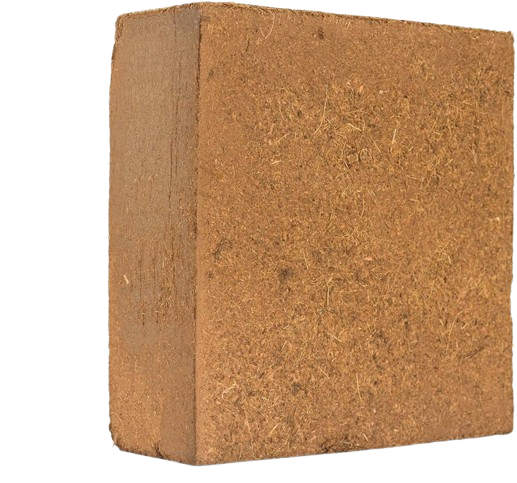
What is Cocopeat Coconut Fiber Planting Medium? -Indonesia’s Tropical Advantage: Coconut Production Many people/The world has long recognized Indonesia as a country that only has two seasons: the rainy season and the dry season. Indonesia has a tropical climate that allows coconut palms to flourish, resulting in a large number of coconuts. The production of coconuts, on the other hand, is not instantaneous; it takes several years between planting and harvesting. Coconut is one of the major economic export products that has a significant impact on international trade. Due to Indonesia’s significant coconut exports, the sector is appealing to the majority of foreign importers. Coconut byproducts, which range from coconut leaves to coconut trees to coconuts themselves, are worth consideration/attention. They are economically valuable goods. Indonesia occasionally struggles to satisfy its own coconut demands due to the strong demand for the commodity.
Exporters/Foreign importers seek only coconut fiber among coconut products for export. There are many instances of that in certain regions of Indonesia. People do not widely know the uses of coconut fiber. People use the coconut’s contents, and the coconut leaves only the husk. Use the contents of a coconut and leave only the husk. As if it were a profound sadness, People dump the waste and leave it unnoticed by the side of the road. In certain parts of Indonesia, people simply throw away coconut fiber, which is a crucial source of knowledge for business owners looking to turn raw materials into finished products and develop processed items that are more advantageous to a large population. Tiny fibers group together to form a layer of soft, interwoven strands, which constitutes the form of coconut fibers.
The fruit of the coconut is oval in shape and has a hard shell. Here, the ingenuity of the Indonesian people extends beyond a single aspect. The combination of the coconut’s three components—the fruit-filled interior, the water, the shell, and the husk (the focus of this article)—can produce creativity.
As it happens. Indonesian Coconut Potential: Tropical Climate and Export Commodity
People convert a significant amount of coconut into goods on both sides, not just one. Not to mention coconut leaves, which people use to create handicrafts that have great aesthetic worth on the global market. A very straightforward but time-consuming procedure transforms coconut fibers into a finer product. Prior to processing it into coconut powder, Indonesian used coconut fiber to clean floors and dishes; now we can use it as an organic fertilizer. Processing coconut fiber makes cocopeat, a lightweight, non-fibrous material that combines coconut fiber with the coconut husk The Dutch, who were researching and developing coconuts, made this historic discovery over the course of many years. Creating the present reliable tanagh substitute. With the absorbent and water-retaining qualities of cocopeat. Pores make it easier for sunlight to enter and air to circulate. Trichoderma enzyme is present.
With the enzyme type originating from fungi. simple to manage fungal infections and diseases spread through the soil. Usage as a soil replacement, cocopeat as a hydroponic or organic cultivation medium. Chlorine reacts with water to produce hydrochloric acid due to its high chlorine concentration. First, in a neutral media environment. To lower the chlorine level, it’s a good idea to first wash it before using it. The source of this expanding media is initially coconut husk fiber.The global community considers it a worldwide option for enhancing the fertility of soil. Because it will create amazing plants if combined with sandy soil. Plant fertilizer and nutrition still need special attention since this medium is nutrient-poor.
BENEFITS OF COCOPEAT THAT WE CAN USE FOR PLANTS
According to its function, cocopeat has many benefits as a plant medium that replaces rich soil, especially when compared to other growing mediums. With the following advantages:
a. Coconut husk, which comes from organic material, is an environmentally beneficial material that degrades in the soil when users stop using it. Additional processing allows users to recycle cocopeat after use.
b. Simple to use This growing medium will be perfect for novices who are just starting to learn how to grow plants hydroponically.
c. Very absorbent. This husk-based growth medium has a strong water absorption capacity; it can even absorb twice as much. Cocopeat helps prevent plants from drying out too quickly. To avoid harming the roots of plants, we should water them less often
d. Cocopeat is durable and lasts a long time since it helps conserve material usage and
Pests do not easily infest the growth medium. The explanation for this is that soil-borne pests are not fond of this growth environment.
Texture resembling dirt Despite its soil-like texture and ability for plants to thrive in it, its brown hue indicates that it is nutrient deficient and may offer a nutritional solution.
e. Additional advantages In addition to its applications as a novel planting medium, other applications include its simplicity of usage as a medium for invertebrate species such as worms, as well as its use as coal fuel and feedstock for the production of wood crafts. The cocopeat production process uses coconut fiber as the planting medium.