
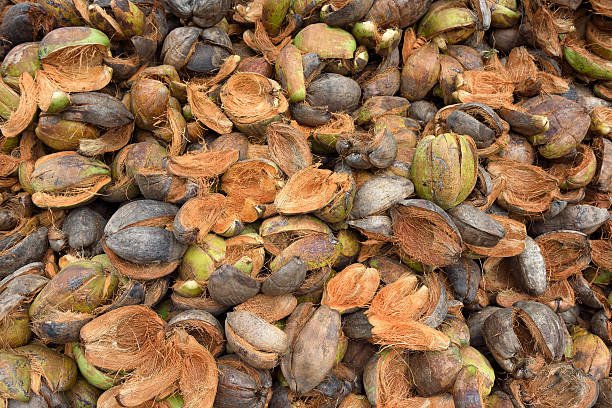
What do people use cocopeat for? OPTIMAL UTILIZATION OF COCOPEAT. We process cocopeat from waste coconut fiber into a usable product with greater market value. Cocopeat’s market value lies in its use as a planting medium. You require four things to use it in pots or prepare a good potting mix.
First, take 30% of the soil used for a normal garden in a pot, then add it to it, and finally, mix in 20% of the wood pulp with these ingredients. This mixture contains the nutrients needed by plants.
Cocopeat functions as an excellent water retainer. This material can quickly rewet when we add water, even after drought. Cocopeat retains air better than soil. This ability of cocopeat makes it the primary planting medium. Plants with cocopeat are hydrophilic (water-loving), making this material absorbent 6-7 times its initial weight and able to retain water.The characteristics of Sphagnum moss make it best suited for retaining only 35 percent water.
Cocopeat can bind 40 percent oxygen in the air, better than soil, which only holds 2-3 percent. Excessive watering of cocopeat can cause root rot. We highly recommend mixing cocopeat with sand or rice husks. You should apply water in small increments, but let it continue to flow at a drip rate (using drip and aeroponic methods).We highly recommend using Dextar during the fertilization process if cocopeat is intended for cultivation.
Besides being a growing medium, cocopeat is a raw material for producing energy derived from the increasingly depleted fossilized bones of ancient microscopic animals. Furthermore, the global demand for this energy source continues to increase. Therefore, researchers and companies continue to conduct research to find alternative energy sources, known as bioenergy. We produce this from organic biomass as the primary raw material, either a product of photosynthesis or waste. It is common for the industry to use biomass materials for bioenergy that are waste from which the industry has extracted the primary products, leaving them with little economic value.
We can also convert or transform biomass into other forms, such as:
- Biogas: derived from organic plant and animal waste or agricultural waste
- Biodiesel: derived from vegetable oils such as jatropha curcas and palm oil
- Bioethanol: derived from plant sugars (wheat, potatoes, sugar beets, rice, sunflowers) in wood fiber.
What do people use cocopeat for? OPTIMAL UTILIZATION OF COCOPEAT.AL.