
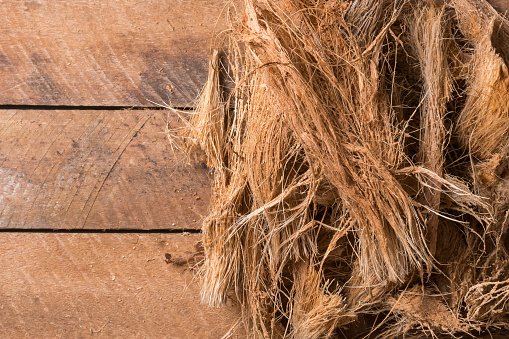
EXPORT OF PROCESSED INDONESIAN. We consider coconut fiber the coarse fiber found in coconuts. People find coconut fiber, which they consider the coarse fiber in coconuts, between the very hard inner shell and the outer layer.
Coconut fiber is part of the coconut fruit. People divide coconuts into several parts, including:
- The pericap is the outer skin with a smooth, slightly hard surface and a thickness of approximately 1 mm.
- The mesocarp is the brown center of the skin with a layer of fine, elongated fibers, and is 3-5 cm thick.
- The endocarp is the very hard part. The shell is between 5 and 7 mm thick, while the outer layer is around 8 and 10 mm.
- We know the coconut’s inner core (endosperm) as the coconut flesh. This part is 1 cm or more thick.
- Coconut water. People consume coconut water as a refreshing drink and often sell it on the roadside, in stalls, or at minimarkets.. It contains substances that can neutralize toxins in the human body. We also use it as an ingredient in isotonic drinks, which are good for those who lack energy or feel weak due to activity
- Low energy levels can overcome this. Coconut water is rich in inorganic ions, such as potassium (290 mg), magnesium (10 mg), and phosphorus (9.2 mg).
Of the five beneficial components of coconuts, the coconut flesh and water are suitable for basic needs and are safe for consumption. Another overlooked aspect is the coconut shell and coconut fiber. In Indonesia, people still throw many coconut shells - away and often found in underutilized areas. In fact, coconut shells are a valuable raw material for charcoal, not only found in wood charcoal but also in Indonesia. Coconut fiber is still popular among some Indonesians because they use it as a raw material for floor mats, brushes, and mattresses, and they even export it as a raw material for car seats.. EXPORTS OF PROCESSED INDONESIAN COCONUT.