
They export processed Indonesian coconut fiberThe Tree of Life.” Because every part of the coconut is special and has various beneficial properties. In our country, Indonesia, commodities are the most important plantation products because they can support the livelihoods of millions of people, making them a valuable national asset. Coconut is both a social and economic commodity. Thus, if there is a maximum change, the commodity price for this sector will affect the living standards and lives of its farmers. Indonesia is the world’s largest coconut producer. Indonesia produced 17.13 million tons of coconuts in 2019. Research from several reliable sources makes Indonesian coconut production one of the largest in the world. The Philippines ranks second with a coconut production of 14.77 million tons.
Following them is India with a coconut production of 14.68 million tons. The government/authorities/records show that coconut production in Sri Lanka is 2.47 million tons. Meanwhile, Brazil is in fifth place with a coconut production of 2.33 million tons. Coconut exports from Indonesia reached 1.54 million tons or US$800 million by the third quarter of 2020, according to data from the Central Bureau of Statistics. The main export destinations for Indonesian coconuts include the United States, the Netherlands, South Korea, China, Japan, Singapore, the Philippines, and Malaysia. They produce coconut derivatives in Indonesia in the form of copra and other derivatives.. Jambi, West Java, North Maluku, and East Java are the main coconut-producing regions in the country.
The fertile soil and weather influence the high coconut production in Indonesia. Indonesia’s natural landscape As an archipelago, Indonesia is the largest archipelago in the world. Stretching from Sabang to Merauke, Indonesia has 17,509 large and small islands with a total area of approximately 7.81 square kilometers. An archipelagic country with the second-longest coastline in the world, measuring 99,083 km. The Pacific, Indian, Eurasian, and Indo-Australian Plates, along with two circumferences, flank Indonesia and generate folds, volcanic mountain ranges, tectonic and volcanic earthquakes, deep-sea trenches, continental volcanic activity, and small earthquakes.
deep, as well as sufficiently stable soil. Unstable soil and many active volcanoes impact soil fertility. The fertile soil in the mountainous region makes a suitable habitat for coconut trees.
c. The South China Sea, the Pacific Ocean, and the Indian Ocean surround our waters. This makes Indonesia highly potential for developing agricultural, plantation, shipping, fisheries, and port activities. Coconut trees arePlantation commodities are one of the profitable crops, given Indonesia’s maritime location. The trees can easily adapt to coastal areas in Indonesian waters. Coconut fruits carried by river currents, reaching the sea and then washing ashore on the Indonesian coast, can easily grow and develop.
d. Geographic Location If viewed from the position of the surface area on Earth. Indonesia is located between two continents, Asia and Australia. Additionally, the Pacific and the Indian Oceans flank Indonesia. The monsoon climate in Indonesia is located between two continents. The rainy season occurs due to the west monsoon winds blowing from Asia, which contain a lot of water vapor. During the dry season, the east monsoon winds from the Australian continent cross Indonesia. Indonesia also doesn’t have winter, allowing all primary activities like agriculture, animal husbandry, and fishing to take place year-round. One example is that coconut trees can grow and thrive properly.
e. Astronomical Location Based on latitude and longitude, Indonesia has a quite strategic location at 60 N – 110 S and 950 E – 1410 W. Based on this location, the factors influencing climate development in Indonesia are its location along the equator, resulting in a tropical climate. Regions with a tropical climate receive sunlight as the center of the solar system throughout the year. This differs from subtropical climates, which have four seasons, and polar climates. Indonesia, with its year-round sunlight and high rainfall, allows for the successful growth of various types of plants. One of them is the coconut tree. In addition to the five factors mentioned above, ecologically, coconut trees are able to grow and adapt to various habitat types.
Coconut trees are quite adaptable to temperature differences. You can almost always find this plant along the equatorial current
Coconut trees adapt thru their hard shells, with the coconut husk being the outermost part that provides protection to keep seed-eating animals away. The purpose of the coconut tree protecting itself from predators is to ensure the continuation of life for the next generation.
Abundant coconut husk waste Indonesia is one of the countries with high coconut production and high coconut fruit consumption, but it lacks the ability to process coconuts well, resulting in significant waste. One of them is consuming coconut fruit drinks. We should not take lightly the litter people leave behind when selling. People only need one or two pieces, but with the volume of buyers increased, the sellers extended the selling duration. Not to mention the number of drink vendors in each sub-district or district. People call this drink degan and consider it harmful waste
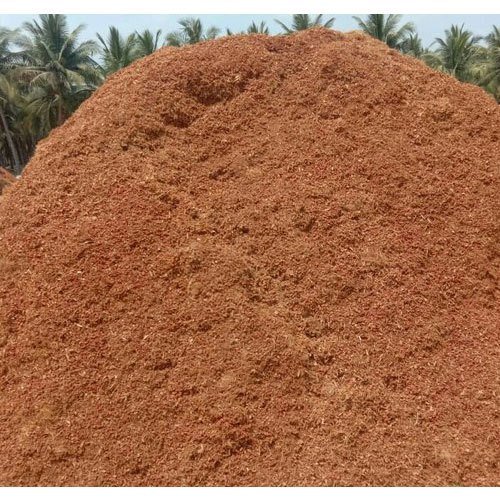
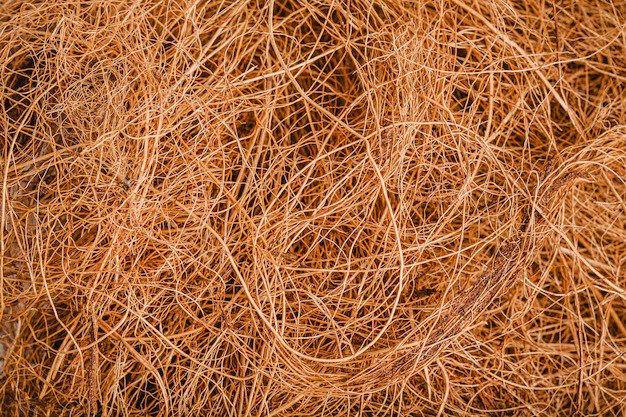
environment. For example, people scatter the ‘degan’ drink waste across several regions in Indonesia. Regarding the proliferation of scattered coconut waste and the lack of clear capacity measures, we need urgent efforts and management. So far, we can utilize coconut fruit waste and also process it into high economic value. People/The industry make coconut shells into charcoal or briquette material. People/The industry use coconut fiber to make mats, growing medium, and other products. However, researchers/the industry still limit documentation on the processing and utilization of coconut fiber into other high-value goods For example, coconut husk fibers, which are raw materials, become finished products such as cocopeat, cocobeet, and cocomesth.
OPPORTUNITIES FOR COCONUT FIBER EXPORT The high production of coconuts in Indonesia, grown on plantations, presents significant opportunities in the international market. The global demand for coconut fiber is at least 408,000 tons per year. For now, Indonesia is only able to export 5 percent of the cocofiber and cocopeat needs in Indonesia. India and Sri Lanka supply the remaining 97% In fact, compared to the ranking of countries in coconut production, Indonesia is at the top, surpassing those two countries. There is a gap between the amount of production and the goods produced, especially coconut fiber. The potential of coconut fiber in Indonesia is very large, but we have not managed and utilized it optimally.