
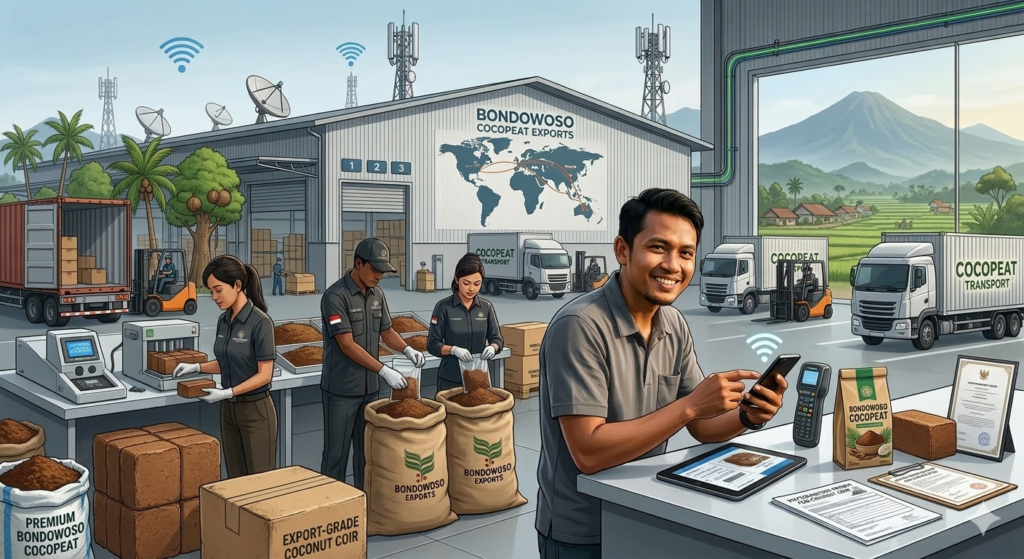
Hi friends all over the world, let me introduce myself, Reynaldi CF, an Indonesian from the small town of Bondowoso in Indonesia. Bondowoso is a very small town, almost far from the hustle and bustle of big cities like Surabaya and Jakarta. As a small town, it was indeed difficult to become a developed city in the 1980s. At that time, in my hometown, everything was still developing, and electricity was still minimal. It wasn’t like big cities with all their various sophisticated features. But now, people in Bondowoso, especially in the villages, have switched to more advanced technology: the internet.
The internet is no longer a foreign thing. Almost everyone uses the internet for their daily needs; social media is no longer a strange thing. In the past, we had to use public telephones; now, with the advent of the digital world, everyone in the village has a cell phone and is tech-savvy.
Even though I live in a village, it’s starting to become easier with the advent of the online world. Online access has become a daily occurrence for residents around my house. Buying packages online, using WhatsApp, TikTok, and watching YouTube videos have become commonplace, even to the point where I consider it as easy as looking at my phone and clicking a button. In the future, technology will become increasingly sophisticated, especially in the world of exports. Exporting is now a challenge for me personally. The challenge of becoming an exporter can’t be a mere pipe dream. It requires extra thought and keeping up with current developments to simplify transactions. Indeed, simply looking at successful exporters abroad makes it seem easy. Just looking from the outside doesn’t reveal the hard work and sweat of the workers who sincerely strive to make a living.
Life in my city doesn’t experience significant economic activity, and many people in my village are leaving for a more decent life. Many people in the city seek an easy life with ample job opportunities. The massive trade potential is supported by the people’s purchasing power. I myself am just an ordinary worker living in the village. Indeed, this was a complaint of mine a few years ago. I’m learning to live a more progressive life. I can’t just rely on fate to be a miserable person, constantly complaining about my circumstances. The goal of exporting, as you might imagine, is simply me profiting from trade. But you’re wrong. I’m merely a pathfinder and a conduit for buyers in need.
On the other hand, as you see, I’m not alone. In my opinion, exporting isn’t a solo endeavor, prioritizing personal gain. My fate lies in the workers who help ensure the factory runs smoothly. Exporting isn’t a solitary endeavor like trading in general. Generally, exporting is large-scale trade involving the shipment of jumbo containers, with a minimum container size of 24.5 tons per container. This requires strong, solid teamwork. From the raw material suppliers to the factory workers, the workers here aren’t simply living a life of pleasure. They are sincere people striving for a living for themselves and their families. Many of our workers dropped out of school because they couldn’t continue their education due to the high cost of education in Indonesia.
I personally don’t impose stringent requirements on workers, but I also impose burdensome conditions. Because generally, if it’s burdensome, it can be a problem for them. They’ll have difficulty finding work; many places here still require a bachelor’s degree to qualify for employment. A bachelor’s degree is difficult for many to obtain.
Our fate lies in export activities here, with around 10 to 15 people we have to manage. We operate as a team, and we really hope that foreigners will give our products a chance. If exports are quiet, it makes me concerned. Many workers here move elsewhere, looking for a living for their families. They range from construction workers, livestock care workers, and domestic helpers. The coconut raw material sector is a crucial factor in our success; we receive all the coconuts we desperately need almost daily. If the export market is quiet, the coconut fiber supply will be hampered, and the coconut fiber supply will become nothing more than a pile of scattered waste, no matter what it’s used for.
Honestly, we have abundant coconut fiber shipments almost every day, and they continue to do so. But now, everything is even more so from waiting buyers. These buyers are the central point that keeps our business running. The fate of so many people who work here depends on this export activity. We don’t start production unless market demand presents an opportunity for orders. Coconuts in our area have become a daily necessity, even becoming trash carelessly thrown on the side of the road. Somehow, with the knowledge I gained a few years ago, this has become easier, transforming previously useless items into highly useful ones. Exporting goods that were once discarded on the side of the road has become useful, processed into excellent cocopeat products.
Our workers feel very happy when there are export activities, very happy because of the ongoing economic activity. This economic activity is much needed. With exports, we don’t have to work odd jobs like in the past. Our families can eat and survive. We can make ends meet through this activity. Failure to respond to buyers has become commonplace. Many of them aren’t sincere and want to deceive by sweetly promising large orders. But I’m familiar with the behavior of buyers who want to deceive, it’s a daily occurrence. Sometimes, someone will order until they’re almost ready for production, but never make a pre-order payment. It’s truly heartbreaking that so many Indonesian export traders make sweet promises but never even get a single buyer.
Their promises are all about collaborating. I honestly don’t need that kind of cooperation. What I need is genuine buyers from abroad who won’t cheat me out of my business. I’m very discouraged when I encounter dishonest traders.
From my personal perspective, based on previous experiences, I’m very suspicious if several buyers order five containers at once, or even 100 containers. This is a common deception used by unscrupulous buyers, as it’s impossible to order that much. In my personal experience, genuine buyers order at most one to two containers of 24.5 tons. Buying that much is questionable. Honestly, I need trust between buyers, buying a little, but honestly, I really like it, not the intention of buying in such amazing quantities, hundreds of containers, but with zero results.
I don’t need you as a buyer buying hundreds of containers, just one container, but consistently. One container with a real, high-quality agreement.
I honestly pursue this activity because I want to get rich quick, but I want to foster togetherness and teamwork, helping local residents who need work to survive, and processing coconut fiber into useful materials. The hundreds of containers you offered are gone with a sincere, honest order for one container. Buyers are welcome to inspect the existing conditions to build trust and visit the factory to see production in action. Our activities are open to anyone who wants to see firsthand. From start to finish, come in the morning when everyone is busy, don’t come at night when we’re sleeping.
My message is not to deal with arrogant buyers who don’t care how rich you are. Being in Indonesia is about politeness.
Although many of our workers come from poor families, we highly value our honor as Indonesians. If you’re reluctant, we’re reluctant. Indeed, customs, besides sales activities, are the fundamental foundation of working here. We respect those who work, greeting you all with our best smiles. What we expect is honesty, standards of politeness, and mutual trust. If you’re interested in our cocopeat products, please contact us immediately via the WhatsApp button; simply type on your phone and you’ll be contacted easily. #Greetings, exporter